Oolong tea · Fujian, China
Huang Jin Gui
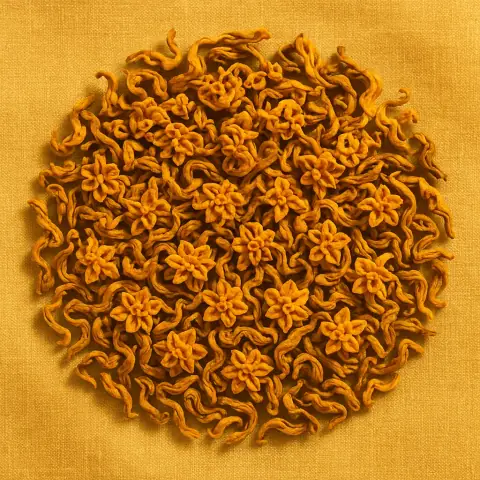
Golden Osmanthus oolong with distinctive floral aroma reminiscent of osmanthus flowers and apricot notes.
 How to brew
| Leaf | Water | Temperature | Time | Infusions | |
|---|---|---|---|---|---|
| Western | 3 g | 250 ml | 90°C / 195°F | 2 min | 3 |
| Gong Fu | 6 g | 100 ml | 90°C / 195°F | 20 s + | 7 |
About this tea
Huang Jin Gui (Golden Osmanthus) stands as one of Anxi's four famous oolong cultivars alongside Tie Guan Yin, though it remains less known internationally. Discovered in the 1940s, this early-budding cultivar was named for its remarkable fragrance reminiscent of osmanthus flowers and its golden liquor. The tea represents Anxi's biodiversity, showing how different cultivars from the same region can produce vastly different flavor profiles.
This cultivar buds earlier than others, making it the first spring oolong harvested in Anxi. The early season growth captures unique aromatic compounds that later harvests lack. Processing requires careful handling - typically 20-30% oxidation with minimal roasting to preserve its distinctive fragrance. The leaves are more delicate than Tie Guan Yin, demanding gentler processing. Some producers create more oxidized versions, but the tea's glory lies in its remarkable aromatics when lightly processed.
The flavor profile centers on its extraordinary fragrance: intense osmanthus flower aroma dominates, accompanied by notes of dried apricot, yellow peach, and honey. The texture is light to medium-bodied with a silky, almost oily mouthfeel. Unlike Tie Guan Yin's orchid notes, Huang Jin Gui offers warmer, golden flower aromatics. The taste is delicately sweet with no astringency, just pure floral nectar. The golden-yellow liquor matches its name perfectly. Multiple infusions reveal evolution from intensely floral to fruity to subtly sweet.
Brewing recommendations: Use 1 teaspoon (3g) per 250ml cup with water at 90°C (195°F), steeping for 2 minutes. This tea releases flavor quickly. For gongfu style, use 6-7g per 100ml, steeping just 20-30 seconds initially. Avoid oversteeping, which diminishes its prized fragrance. Can yield 5-6 aromatic infusions.
Best enjoyed when you can focus on its remarkable aromatics. Popular in China for special occasions when its golden color symbolizes prosperity. Pairs beautifully with light desserts featuring stone fruits, almond cookies, and honey cakes. Also excellent with mild dim sum. The intense fragrance makes it perfect for introducing people to the aromatic possibilities of oolong. Store carefully - its delicate nature means it doesn't age as well as other oolongs.
Caffeine, in context
Per 250 ml cup, brewed as directed.
Flavor profile
- osmanthus
- apricot
- floral
- golden
Health benefits
- antioxidants
- mood enhancement
- digestion
- skin health
Pairs wonderfully with
- almond cookies
- light fruits
- Chinese sweets
You might also enjoy

Frequently asked questions
Can you re-steep Huang Jin Gui?
Yes — Huang Jin Gui gives 7 good infusions. Start at 20 seconds and add a little time to each round.
How much caffeine is in Huang Jin Gui?
38 mg per 250 ml cup — Medium caffeine.
What water temperature does Huang Jin Gui need?
90°C / 195°F. Hotter water pulls out bitterness; cooler water under-extracts the leaf.
Teafinity times every infusion for you
The app loads this tea's exact schedule, rings even in your pocket, and logs every session — free on iPhone and Android.