Herbal tea · China
Osmanthus
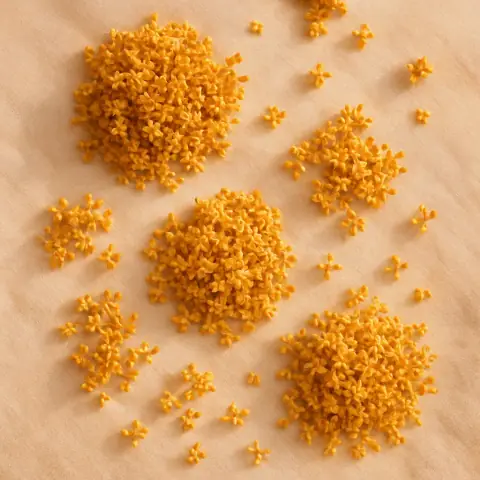
Sweet Chinese flower with apricot and peach notes, often used to scent tea.
 How to brew
| Leaf | Water | Temperature | Time | Infusions | |
|---|---|---|---|---|---|
| Western | 2 g | 250 ml | 85°C / 185°F | 3 min 30 s | 3 |
| Gong Fu | 4 g | 100 ml | 85°C / 185°F | 20 s + | 6 |
About this tea
Osmanthus (Osmanthus fragrans), the 'sweet olive' of China, blooms with intoxicating fragrance each autumn. These tiny golden flowers perfume entire neighborhoods in southern China, where trees mark seasons and memories. Chinese culture prizes osmanthus for millennia - it flavors wines, preserves, and especially tea. The flowers symbolize love and romance, making osmanthus tea traditional for weddings. Unlike many flowers, the fragrance translates beautifully to taste.
Harvesting requires perfect timing - flowers must be gathered within hours of opening for peak fragrance. Traditional processing involves careful shade-drying to preserve delicate aromatics. The tiny flowers are often mixed with green or black tea, though pure osmanthus makes exquisite tisane. Quality shows intact golden-orange flowers with intense apricot-like aroma.
The flavor profile is uniquely fruity-floral: dominant apricot and peach notes with honey sweetness. There's no bitterness or astringency, just smooth, naturally sweet flavor with floral depth. Some detect plum or even leather undertones. The sweetness isn't cloying but refreshing. The pale golden liquor looks like liquid sunshine with room-filling fragrance.
Brewing recommendations: Use 1 teaspoon (2g) flowers per 250ml cup with water at 85°C (185°F). Steep only 3-4 minutes to preserve delicate flavors. Often mixed with green or oolong tea in 1:3 ratio. Beautiful in glass teaware to appreciate golden color. Never needs sweetening due to natural sweetness.
Traditionally believed to improve complexion and reduce dark spots - Chinese beauties drank it for radiant skin. Completely caffeine-free and lovely in the evening. In China, it is a traditional gift to new mothers. Pairs wonderfully with Asian desserts, particularly those featuring stone fruits. The romantic associations make it perfect for special occasions. Also used in high-end perfumes and cosmetics.
Caffeine, in context
Per 250 ml cup, brewed as directed.
Flavor profile
- apricot
- peach
- honey
- floral
Health benefits
- skin health
- relaxation
- antioxidants
- appetite suppression
Pairs wonderfully with
- Chinese pastries
- light cookies
- afternoon tea
- meditation
You might also enjoy

Frequently asked questions
Can you re-steep Osmanthus?
Yes — Osmanthus gives 6 good infusions. Start at 20 seconds and add a little time to each round.
How much caffeine is in Osmanthus?
0 mg per 250 ml cup — Caffeine-free.
What water temperature does Osmanthus need?
85°C / 185°F. Hotter water pulls out bitterness; cooler water under-extracts the leaf.
Teafinity times every infusion for you
The app loads this tea's exact schedule, rings even in your pocket, and logs every session — free on iPhone and Android.