Green tea · Japan
Kukicha
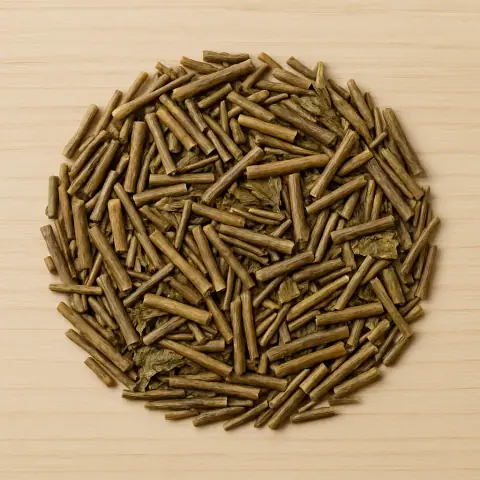
Japanese twig tea made from stems and stalks, naturally low in caffeine with a unique nutty sweetness.
 How to brew
| Leaf | Water | Temperature | Time | Infusions | |
|---|---|---|---|---|---|
| Western | 3 g | 250 ml | 80°C / 175°F | 1 min 30 s | 4 |
About this tea
Kukicha, also called 'twig tea' or 'b?cha,' exemplifies Japanese efficiency and the philosophy of using every part of the tea plant. Made from stems, stalks, and twigs typically discarded during Sencha or Gyokuro production, Kukicha transforms these humble materials into a unique tea with its own devoted following, particularly among macrobiotic diet practitioners.
The twigs and stems, collected during tea processing, undergo the same steaming and drying as leaf teas. These plant parts contain different compounds than leaves - fewer catechins and caffeine but rich in minerals and naturally sweet compounds. The woody materials create unique flavor profiles impossible to achieve with leaves alone. Premium Kukicha from Gyokuro production (called Karigane) commands high prices for its sweetness.
The flavor profile is distinctively different from leaf teas: naturally sweet and creamy with notes of vanilla and nuts, mild with virtually no astringency or bitterness, unique umami quality especially in Gyokuro-based versions, and clean, refreshing finish with slight mineral notes. The appearance - pale yellow liquor with floating twigs - might seem unusual but delivers surprising complexity. Often described as tasting like sweet straw or fresh hay.
Brewing recommendations: Use 1 tablespoon (3g) per 250ml cup with water at 80°C (175°F), steeping for 90 seconds. Very forgiving - difficult to over-steep due to low tannin content. Can be re-steeped multiple times, with some preferring second infusion. Also excellent cold-brewed. Twigs can be reused for multiple sessions.
Ideal for evening drinking due to minimal caffeine (about 10% of leaf tea). Popular in macrobiotic diets for its alkalizing properties. Safe for children and those avoiding caffeine. Pairs well with simple foods - rice, steamed vegetables, mild soups. The natural sweetness makes it excellent as dessert tea. Some roast used Kukicha twigs for an even nuttier flavor profile.
Caffeine, in context
Per 250 ml cup, brewed as directed.
Flavor profile
- nutty
- creamy
- slightly sweet
- mild
Health benefits
- minerals
- alkalizing
- low caffeine
- calcium
Pairs wonderfully with
- light meals
- tofu
- vegetables
- evening snacks
You might also enjoy



Frequently asked questions
Can you re-steep Kukicha?
Yes — Kukicha gives 4 good infusions. Start at 90 seconds and add a little time to each round.
How much caffeine is in Kukicha?
10 mg per 250 ml cup — Low caffeine.
What water temperature does Kukicha need?
80°C / 175°F. Hotter water pulls out bitterness; cooler water under-extracts the leaf.
Teafinity times every infusion for you
The app loads this tea's exact schedule, rings even in your pocket, and logs every session — free on iPhone and Android.