Green tea · Japan
Sencha
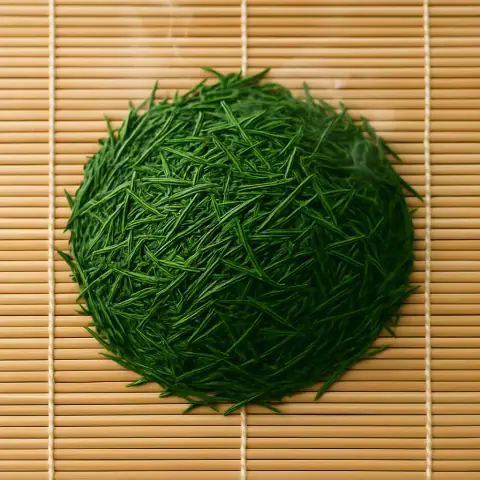
Japan's most popular green tea with fresh, grassy notes and subtle sweetness. Steamed processing preserves its vibrant color.
 How to brew
| Leaf | Water | Temperature | Time | Infusions | |
|---|---|---|---|---|---|
| Western | 3 g | 250 ml | 80°C / 175°F | 1 min 30 s | 3 |
| Gong Fu | 5 g | 100 ml | 80°C / 175°F | 30 s + | 5 |
About this tea
Sencha represents 80% of Japan's tea production and embodies the essence of Japanese green tea culture. First developed in the 18th century by Nagatani Soen, who pioneered the steaming method that defines Japanese green tea, Sencha revolutionized tea production by making high-quality tea accessible beyond the aristocracy.
The steaming process (distinguishing Japanese from Chinese pan-fired green teas) occurs immediately after harvest, preventing oxidation and preserving the leaves' vibrant green color and fresh flavor. Steaming duration creates different styles: Asamushi (light-steamed, 20-30 seconds) produces delicate, refined teas; Chumushi (medium-steamed, 30-40 seconds) offers balance; and Fukamushi (deep-steamed, 40-80 seconds) creates darker, more intense teas with broken leaves that brew quickly.
The flavor profile varies by steaming level and harvest season: fresh, grassy notes reminiscent of steamed vegetables, subtle umami undertones, natural sweetness balanced with pleasant astringency, and a clean, refreshing finish. First flush (Shincha) offers the sweetest, most delicate flavors, while later harvests develop more astringency and body. The liquor ranges from pale yellow-green to deep emerald depending on steaming level.
Brewing recommendations: Use 1 teaspoon (3g) per 250ml cup with water at 80°C (175°F), steeping for 90 seconds. Japanese style uses multiple short infusions: first 60 seconds, second 20 seconds, third 40 seconds. Use a kyusu (side-handled teapot) if available for authentic preparation. Never add milk or sugar.
Best enjoyed throughout the day, particularly with Japanese cuisine. Pairs excellently with sushi, tempura, miso soup, and wagashi (Japanese sweets). The tea's astringency cleanses the palate between dishes. In Japan, Sencha accompanies both formal tea gatherings and casual daily drinking, representing accessible refinement.
Caffeine, in context
Per 250 ml cup, brewed as directed.
Flavor profile
- grassy
- fresh
- vegetal
- slightly sweet
Health benefits
- antioxidants
- metabolism
- focus
- immune support
Pairs wonderfully with
- sushi
- rice dishes
- light salads
- seafood
You might also enjoy

Frequently asked questions
Can you re-steep Sencha?
Yes — Sencha gives 5 good infusions. Start at 30 seconds and add a little time to each round.
How much caffeine is in Sencha?
30 mg per 250 ml cup — Medium caffeine.
What water temperature does Sencha need?
80°C / 175°F. Hotter water pulls out bitterness; cooler water under-extracts the leaf.
Teafinity times every infusion for you
The app loads this tea's exact schedule, rings even in your pocket, and logs every session — free on iPhone and Android.