Green tea · Japan
Matcha
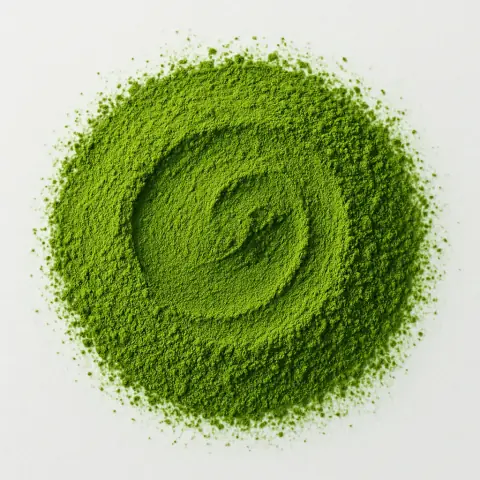
Stone-ground green tea powder with intense umami flavor and vibrant green color. Provides sustained energy.
 How to brew
| Leaf | Water | Temperature | Time | Infusions | |
|---|---|---|---|---|---|
| Western | 2 g | 250 ml | 70°C / 160°F | — | 1 |
About this tea
Matcha, meaning 'powdered tea,' represents the pinnacle of Japanese tea craftsmanship and the heart of the Japanese tea ceremony (chanoyu). Introduced from China by Zen Buddhist monk Eisai in 1191, Matcha became central to Japanese aesthetics and philosophy. Unlike other teas where leaves are discarded, Matcha involves consuming the entire leaf, which is why the flavour is so concentrated.
Production begins with shading tea plants (typically Tencha cultivar) for 3-4 weeks before harvest, forcing plants to produce more chlorophyll and amino acids, particularly L-theanine. Only the finest young leaves are hand-picked, steamed, dried, and deveined, removing all stems. These Tencha leaves are then slowly ground between granite stones, taking one hour to produce just 30 grams of Matcha. The grinding must be slow to prevent heat damage.
The flavor profile is complex and intense: profound umami from high amino acid content, subtle sweetness underneath initial astringency, vegetal notes of fresh spinach or seaweed, and a creamy, almost buttery texture. Quality varies dramatically - ceremonial grade offers sweetness and minimal bitterness, while culinary grade has more astringency suitable for lattes and cooking. Color indicates quality: vibrant jade green suggests proper shading and freshness.
Brewing recommendations: Sift 2g (1/2 teaspoon) through a fine mesh to remove clumps. Add 60-70ml of 70°C (160°F) water. Whisk vigorously in 'M' or 'W' motion using a bamboo chasen until frothy. For usucha (thin tea), use less powder and more water; for koicha (thick tea), use more powder for paste-like consistency. Always use fresh Matcha - it oxidizes quickly after opening.
Traditionally consumed during tea ceremony or meditation, modernly enjoyed as lattes, smoothies, and in cooking. The combination of caffeine (70mg per serving) and L-theanine provides sustained energy without jitters. Pairs with traditional Japanese sweets designed to balance Matcha's intensity. Store in refrigerator and consume within 3-4 weeks of opening for optimal freshness.
Caffeine, in context
Per 250 ml cup, brewed as directed.
Flavor profile
- umami
- creamy
- vegetal
- slightly sweet
Health benefits
- antioxidants
- sustained energy
- focus
- metabolism
Pairs wonderfully with
- wagashi
- mochi
- white chocolate
- almond milk
You might also enjoy



Frequently asked questions
Can you re-steep Matcha?
No — Matcha is whisked into the water, not steeped, so there is nothing left to re-infuse.
How much caffeine is in Matcha?
70 mg per 250 ml cup — High caffeine.
What water temperature does Matcha need?
70°C / 160°F. Hotter water pulls out bitterness; cooler water under-extracts the leaf.
Teafinity times every infusion for you
The app loads this tea's exact schedule, rings even in your pocket, and logs every session — free on iPhone and Android.