Herbal tea · Europe
Elderflower
Delicate white flowers with sweet, muscat-like flavor and immune-supporting properties.
 How to brew
| Leaf | Water | Temperature | Time | Infusions | |
|---|---|---|---|---|---|
| Western | 3 g | 250 ml | 82°C / 180°F | 7 min | 1 |
About this tea
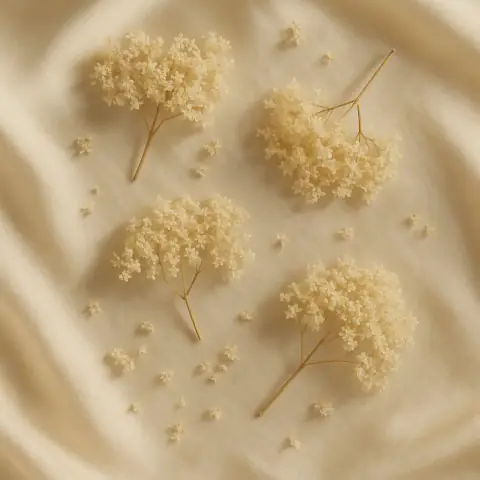
Elderflower, from the European elder tree (Sambucus nigra), blooms briefly in early summer, carpeting hedgerows with cream-colored lace. These fragrant flowers have flavored cordials, wines, and medicines since Roman times. Medieval folklore deemed elder trees sacred, housing protective spirits. The flowers must be harvested at peak bloom on dry, sunny mornings when fragrance is strongest - timing is everything with only a two-week window.
The delicate flowers require gentle handling to preserve volatile compounds. Traditional drying involves laying flower heads on screens away from direct sun. Quality elderflower shows creamy-white color with sweet, honey-muscat aroma. Brown flowers indicate age or poor drying. The flowers are often removed from stems before drying as stems add bitterness. European elderflower is superior to American varieties.
The flavor profile is delightfully floral: sweet muscat grape notes with hints of honey and vanilla. There's a creamy quality reminiscent of meadowsweet with subtle fruitiness. No bitterness when properly prepared, just delicate sweetness. Fresh flowers offer more complexity than dried. The pale golden liquor looks like liquid sunshine with enchanting floral aroma.
Brewing recommendations: Use 2 teaspoons (3g) dried flowers per 250ml cup with water at 82°C (180°F) - not boiling. Steep 7 minutes. Fresh flowers need only 3-5 minutes. Cover while steeping to trap volatile oils. Excellent alone or with lemon. Traditional cordials add citric acid. Makes exceptional iced tea with sparkling water.
European households have reached for elderflower through the cold months for centuries. Safe for children, and a gentle choice on a winter evening. Pairs beautifully with gooseberries, strawberries, and other summer fruits. In Austria, elderflower fritters are a seasonal delicacy. The flowers also make exquisite liqueurs and champagne-like beverages. Harvest sustainably - leave some flowers to become elderberries.
Caffeine, in context
Per 250 ml cup, brewed as directed.
Flavor profile
- floral
- muscat
- honey-like
- delicate
Health benefits
- immune support
- anti-viral
- respiratory health
- fever reduction
Pairs wonderfully with
- honey
- lemon
- summer drinks
- elderflower cordial
You might also enjoy

Frequently asked questions
Can you re-steep Elderflower?
No — Elderflower gives one infusion. Use fresh leaf for the next cup.
How much caffeine is in Elderflower?
0 mg per 250 ml cup — Caffeine-free.
What water temperature does Elderflower need?
82°C / 180°F. Hotter water pulls out bitterness; cooler water under-extracts the leaf.
Teafinity times every infusion for you
The app loads this tea's exact schedule, rings even in your pocket, and logs every session — free on iPhone and Android.