Herbal tea · Egypt
Chamomile
Gentle floral tisane made from chamomile flowers, known for its calming properties.
 How to brew
| Leaf | Water | Temperature | Time | Infusions | |
|---|---|---|---|---|---|
| Western | 3 g | 250 ml | 95°C / 203°F | 6 min | 1 |
About this tea
Chamomile, one of humanity's oldest medicinal herbs, has been soothing people for over 5,000 years. Ancient Egyptians dedicated it to their sun god Ra, while Romans used it as incense and beverage. The name derives from Greek 'chamaimelon' meaning 'earth apple,' referring to its apple-like scent. Two varieties dominate: German chamomile (Matricaria recutita) and Roman chamomile (Chamaemelum nobile), with German being more common in teas.
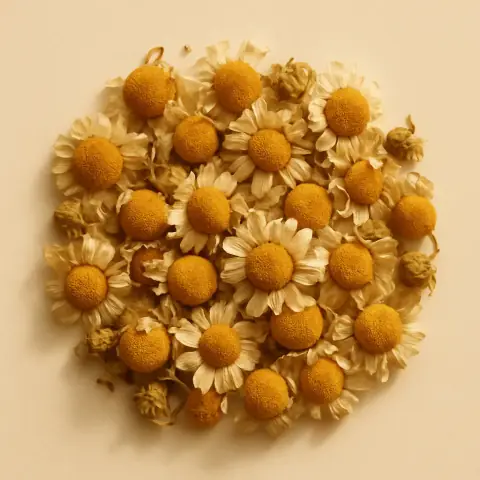
The tiny daisy-like flowers are harvested when fully open, typically in early morning after dew evaporates but before the sun intensifies. Quality chamomile shows intact flower heads with bright white petals and golden centers. The essential oils that define its character - including chamazulene and bisabolol - are concentrated in the flower heads. Hand-harvesting preserves these delicate compounds better than mechanical methods.
The flavor profile is gentle and soothing: honey-like sweetness with subtle apple notes, a creamy mouthfeel, and hints of fresh hay. Quality chamomile lacks bitterness, instead offering a naturally sweet, almost buttery finish. The aroma is distinctively apple-like with floral undertones. The pale golden liquor has an almost silky texture that coats the mouth pleasantly.
Brewing recommendations: Use 1-2 teaspoons (3g) per 250ml cup with water at 95°C (203°F) and steep for 6 minutes to extract beneficial compounds. Cover while steeping to preserve volatile oils. Can be re-steeped once. Add honey to enhance natural sweetness; milk is uncommon but not unheard of.
Best enjoyed in the evening - long a classic last cup before bed, and a familiar choice after dinner. Pairs well with honey cakes, shortbread, and mild cookies. Safe for children when properly diluted. Avoid if allergic to ragweed or daisies. The German Commission E approves it for gastrointestinal spasms and inflammatory conditions.
Caffeine, in context
Per 250 ml cup, brewed as directed.
Flavor profile
- floral
- honey-like
- apple notes
- soothing
Health benefits
- sleep aid
- calming
- anti-inflammatory
- digestion
Pairs wonderfully with
- honey
- lemon
- cookies
- light desserts
You might also enjoy



Frequently asked questions
Can you re-steep Chamomile?
No — Chamomile gives one infusion. Use fresh leaf for the next cup.
How much caffeine is in Chamomile?
0 mg per 250 ml cup — Caffeine-free.
What water temperature does Chamomile need?
95°C / 203°F. Hotter water pulls out bitterness; cooler water under-extracts the leaf.
Teafinity times every infusion for you
The app loads this tea's exact schedule, rings even in your pocket, and logs every session — free on iPhone and Android.