Green tea · Zhejiang, China
Anji Bai Cha
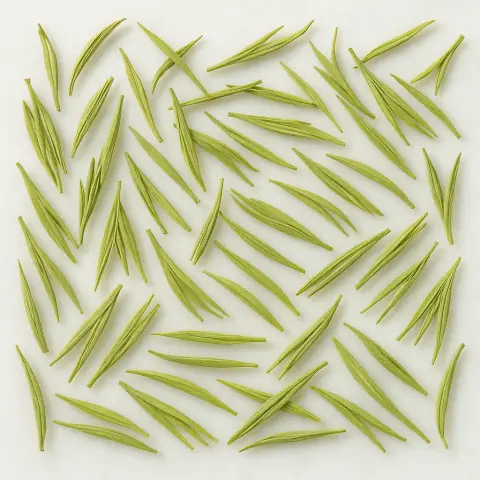
Rare pale green tea from white tea cultivar with exceptional amino acid content and umami sweetness.
 How to brew
| Leaf | Water | Temperature | Time | Infusions | |
|---|---|---|---|---|---|
| Western | 3 g | 250 ml | 80°C / 175°F | 2 min | 2 |
| Gong Fu | 5 g | 100 ml | 80°C / 175°F | 30 s + | 4 |
About this tea
Anji Bai Cha (Anji White Tea) creates confusion with its name - despite being called 'white tea,' it's processed as green tea. This rare tea from Anji County in Zhejiang Province comes from a unique albino tea cultivar that produces pale, almost white leaves in early spring when temperatures are below 23°C. Once temperatures rise, leaves turn green, making the harvest window extremely limited.
The pale leaves result from a genetic mutation causing low chlorophyll but extraordinarily high amino acid content - particularly theanine at 6-8%, double that of regular green tea. This biochemical uniqueness was only discovered in 1982, though the cultivar has existed for centuries. The limited harvest window and specific temperature requirements make authentic Anji Bai Cha rare and expensive.
The flavor profile is remarkably delicate and sweet: intense natural sweetness from high amino acids, profound umami without any astringency, delicate, almost ethereal character, and subtle notes of fresh bamboo. The high theanine content is what makes the sweetness so pronounced. The pale jade liquor has exceptional clarity and seems to glow in the cup.
Brewing recommendations: Use 1 teaspoon (3g) per 250ml cup with water at 80°C (175°F), steeping for 2 minutes. The delicate leaves scorch easily. Best brewed in glass to appreciate the pale beauty. First infusion captures the sweetness; subsequent infusions reveal umami depth.
Best savored slowly in quiet moments to appreciate its subtlety. Pairs beautifully with sashimi, delicate sweets, or enjoyed alone for meditation. The exceptional amino acid content is exactly what gives it that sweetness and depth of umami. Limited production and short harvest window make authentic Anji Bai Cha a treasure for connoisseurs.
Caffeine, in context
Per 250 ml cup, brewed as directed.
Flavor profile
- umami
- sweet
- delicate
- bamboo
Health benefits
- highest amino acids
- calming
- skin health
- l-theanine
Pairs wonderfully with
- sashimi
- light sweets
- spring vegetables
- meditation
You might also enjoy


Frequently asked questions
Can you re-steep Anji Bai Cha?
Yes — Anji Bai Cha gives 4 good infusions. Start at 30 seconds and add a little time to each round.
How much caffeine is in Anji Bai Cha?
20 mg per 250 ml cup — Low caffeine.
What water temperature does Anji Bai Cha need?
80°C / 175°F. Hotter water pulls out bitterness; cooler water under-extracts the leaf.
Teafinity times every infusion for you
The app loads this tea's exact schedule, rings even in your pocket, and logs every session — free on iPhone and Android.