Oolong tea · Taiwan
Aged Oolong (Lao Cha)
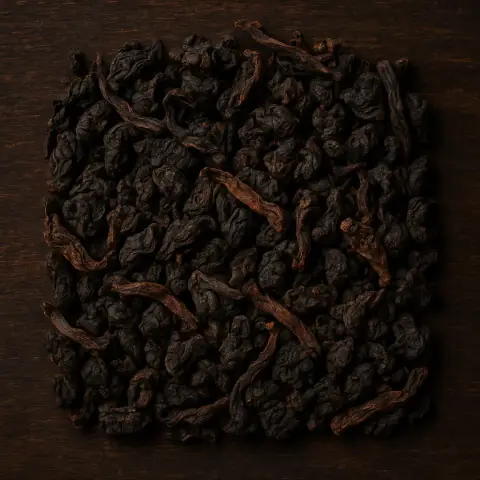
Vintage oolong aged for years developing complex medicinal and fruity notes.
 How to brew
| Leaf | Water | Temperature | Time | Infusions | |
|---|---|---|---|---|---|
| Western | 5 g | 250 ml | 93°C / 200°F | 2 min | 4 |
| Gong Fu | 8 g | 100 ml | 93°C / 200°F | 30 s + | 12 |
About this tea
Aged Oolong (Lao Cha) represents tea as investment and medicine, with properly stored oolongs improving over decades like fine wine. The tradition began accidentally when unsold tea inventory was rediscovered years later, transformed into something extraordinary. Taiwan and Fujian both produce aged oolongs, with some reaching 30+ years old. The aging process fundamentally changes the tea's chemistry, creating flavors impossible in fresh tea.
Proper aging requires specific conditions: moderate humidity (60-70%), good air circulation, and absence of foreign odors. Traditional storage involves sealed ceramic jars, periodically opened for re-roasting to prevent excess moisture. The tea undergoes slow oxidation and fermentation, with microorganisms playing a beneficial role similar to wine or cheese aging. Every few years, the tea is gently re-roasted to maintain integrity. Well-aged oolong develops a distinctive reddish-brown color and complex aroma combining fruit, wood, and herbs.
The flavor profile is complex and medicinal: initial woody, earthy notes reminiscent of aged wood and Chinese herbs give way to surprising fruitiness - dried plums, dates, and figs. The texture is remarkably smooth and thick, coating the mouth with no astringency. Subtle medicinal qualities emerge - not unpleasant but complex like aged Pu-erh. The finish is sweet and warming, with flavors lingering long after swallowing. Each infusion reveals different aged characteristics. The qi (energy) is notably calming and grounding.
Brewing recommendations: Use 1 tablespoon (5g) per 250ml cup with water at 93°C (200°F), steeping for 2 minutes. Aged tea needs heat to open. For gongfu style, use 8g per 100ml, steeping 30-45 seconds initially after a rinse. Can yield 10+ infusions, improving as it opens. Purple clay enhances aged character.
Best savored during contemplative sessions to appreciate complexity. In Chinese culture, aged oolong is served to honored guests and used medicinally for digestion and warming. Pairs excellently with dried fruits, dark chocolate, aged cheeses, and nuts. Also traditional after heavy meals. The investment aspect makes it popular for special occasions and gift-giving. This is drinkable history - decades of transformation in every cup.
Caffeine, in context
Per 250 ml cup, brewed as directed.
Flavor profile
- woody
- plum-like
- medicinal
- smooth
Health benefits
- aged tea benefits
- digestion
- warming
- gut health
Pairs wonderfully with
- dried fruits
- dark chocolate
- aged cheese
- contemplation
You might also enjoy
Frequently asked questions
Can you re-steep Aged Oolong (Lao Cha)?
Yes — Aged Oolong (Lao Cha) gives 12 good infusions. Start at 30 seconds and add a little time to each round.
How much caffeine is in Aged Oolong (Lao Cha)?
35 mg per 250 ml cup — Medium caffeine.
What water temperature does Aged Oolong (Lao Cha) need?
93°C / 200°F. Hotter water pulls out bitterness; cooler water under-extracts the leaf.
Teafinity times every infusion for you
The app loads this tea's exact schedule, rings even in your pocket, and logs every session — free on iPhone and Android.